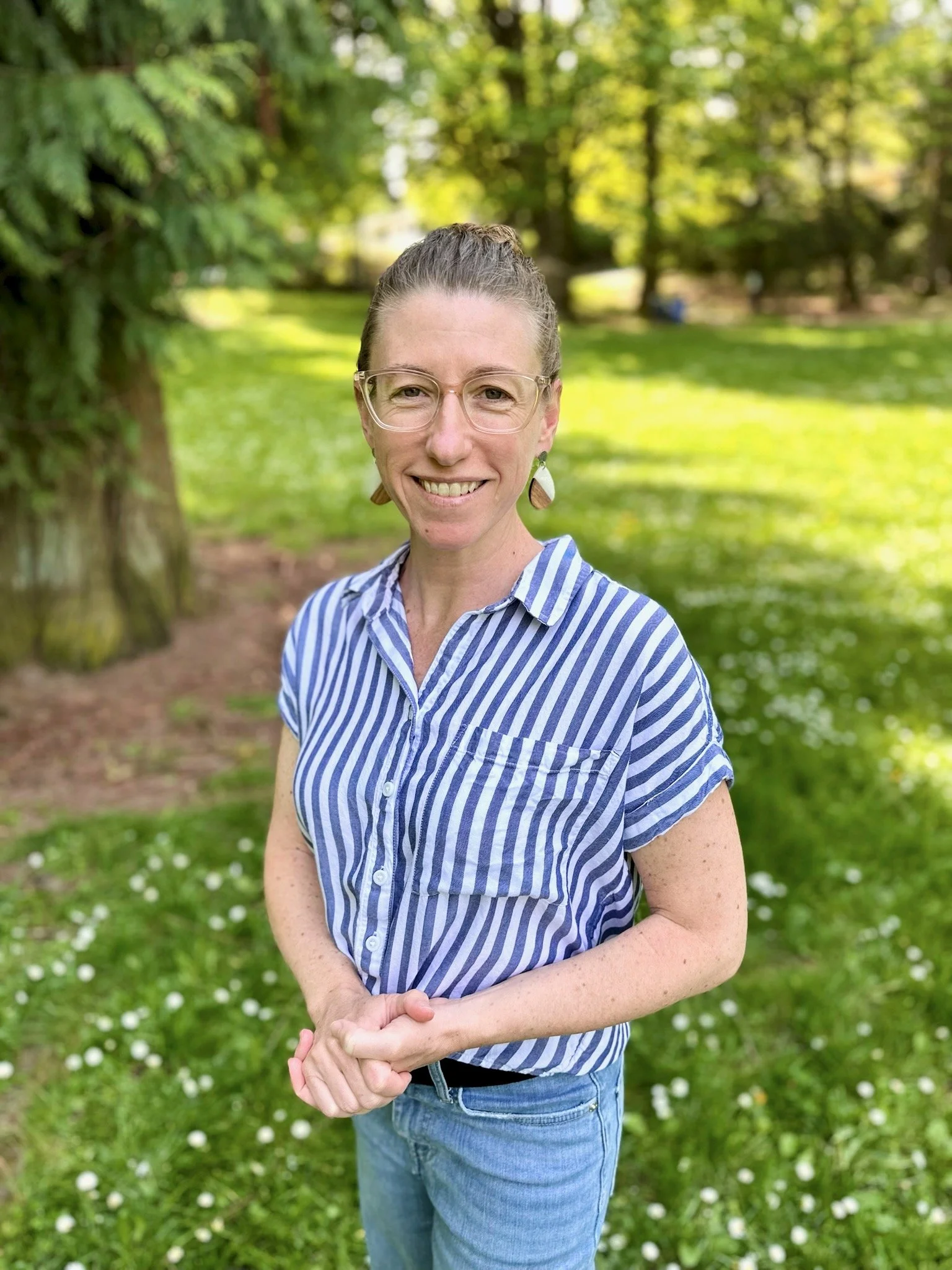
Hi! I’m Julie.
I'm a public school advocate and SPS parent.
Over the past decade, what began as curiosity about my children’s public school experiences has grown into a deep commitment to transforming Seattle Public Schools into a system that better serves all of its 50,000 students.
I have participated in legislative advocacy for increased (and progressive!) education funding, and in grassroots organizing against school closures.
At the district level, I cover—and critique—SPS decision making in The Bulletin.
At the neighborhood level, I’ve been serving for many years in PTA roles including Advocacy Chair, budget committee rep, and more. I serve as the parent representative on Building Leadership Teams at the elementary and middle school levels.
I’m also the creator/writer behind Little Sac, Big World, a newsletter that connects city, state, and district decisions to their impacts on our neighborhood elementary (Sacajawea, known colloquially as “Sac”).
I believe that understanding how we got here is the best foundation for building a better district together.
If there’s something you’d like to see covered, drop me a line!
A Few Thoughts on Seattle Public Schools
Here are a few areas where I believe SPS has huge opportunities—and the most urgent mandates for improvement. My opinions have grown from nearly a decade of engagement with the district.
-
Ineffective curricula, distracting technology, opaque grading policies, large class sizes, low graduation rates, limited advanced and specialized learning programs…opportunities for improving academic rigor at SPS are clear.
Some of these problems can be fixed through policy, at effectively no cost. Let’s get on that! Others require financial investment—but what should a school district be investing in, if not the academic success of its students?
The good news is that our classrooms are already overwhelmingly staffed with outstanding, committed teachers. We just need to better support them in helping our students reach higher.
-
We are operating at an unsustainable annual loss. There are new signs of change…and yet. Central office costs are enormous, and we aren’t getting the improved results we should expect from our spending on special education and transportation.
We are trying to reverse a budget crisis, so where are the financial audits? The spending scrutiny? We need elected board members who assure themselves, and the public, that the multimillion-dollar expenses and annual budgets they approve are reasonable. Without scrutiny, what is the purpose of a board vote?
We also need to turn around the public austerity narrative that has been weaponized to justify terrible decisions, from school closures to curriculum adoptions led by budget needs rather than academic effectiveness.
-
SPS has been operating for years without effective board oversight—that’s how you end up in a fiscal crisis. The current board is finally strengthening its oversight muscles, and I hope that shift accelerates.
We need a board that holds the district accountable to long-term planning: for construction & zoning, for programming, and for budgeting. Without such planning, we end up with catastrophes like half-baked school closure plans, the dismantling of popular programs, and financial insolvency.
To do this, the board must become more proactive. Board directors should be able to exercise ‘no’ votes without grinding district operations to a halt. I’d also like to see directors engaging in two-way communication with the public like the elected officials that they are. That means talking with constituents, but also publicly explaining the reasoning behind, and impacts of, their choices.